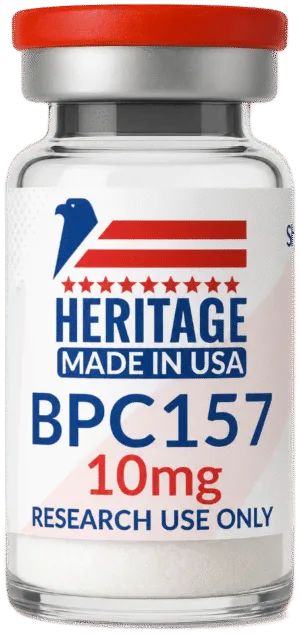
BPC-157 10mg: Educational Research, Mechanism & Safety Guide
BPC-157 10mg refers to a product labeled as containing 10mg of BPC-157 (Body Protection Compound-157), an experimental peptide that has been investigated primarily in preclinical research involving tissue repair, gastrointestinal biology, inflammation, and vascular signaling.
BPC-157 is not an FDA-approved medication, and evidence from animal and laboratory studies should not be presented as proof of established benefits in humans. The 10mg designation refers to the stated product quantity and is not an approved therapeutic dose.
What Is BPC-157?
BPC-157 is a synthetic peptide consisting of 15 amino acids. It was originally identified in relation to compounds associated with gastric juice and has subsequently become a subject of experimental research.
Research has investigated BPC-157 in areas including:
- Tissue-repair mechanisms
- Gastrointestinal function
- Inflammatory signaling
- Blood-vessel formation
- Cellular migration
- Tendon and ligament research
- Nervous-system research
Much of the available evidence comes from animal and laboratory studies, rather than large, high-quality human clinical trials.
How Does BPC-157 Work?
The precise mechanism of BPC-157 remains incompletely understood.
Preclinical research suggests that BPC-157 may influence pathways associated with vascular endothelial growth factor (VEGF), nitric-oxide signaling, cellular migration, and tissue responses to injury.
These pathways are relevant to blood-vessel formation and tissue repair.
However, proposed mechanisms from laboratory research do not establish that BPC-157 produces the same effects in humans.
BPC-157 and Tissue-Repair Research
BPC-157 has attracted considerable interest because animal studies have investigated its potential relationship with tissue-repair processes.
Researchers have examined effects involving:
- Tendons
- Ligaments
- Muscle
- Skin
- Bone
- Gastrointestinal tissues
Some experimental models have reported potentially favorable findings, but these results should be considered preliminary.
There is currently insufficient evidence to describe BPC-157 as a clinically proven treatment for injuries.
BPC-157 and Gastrointestinal Research
Another major area of investigation is gastrointestinal biology.
Preclinical studies have examined BPC-157 in experimental models involving gastrointestinal injury and inflammation.
These findings have generated hypotheses about potential effects on gastrointestinal tissues and vascular pathways.
However, evidence from animal models cannot establish that BPC-157 safely treats ulcers, inflammatory bowel disease, gastritis, or other gastrointestinal disorders in humans.
BPC-157 and Inflammation
BPC-157 has also been investigated in relation to inflammatory signaling.
Experimental research suggests that it may influence pathways involved in the body’s response to tissue injury.
This has contributed to interest in BPC-157 as a potential research tool for studying inflammation and tissue recovery.
The distinction between anti-inflammatory research and an approved anti-inflammatory treatment is important.
What Does “10mg” Mean?
The 10mg designation indicates the stated amount of BPC-157 contained in a particular product.
It does not represent an FDA-approved dosage.
Research products can vary in purity, formulation, concentration, and manufacturing quality. Therefore, the amount printed on a product label should not be interpreted as evidence of a clinically validated treatment regimen.
Potential Research Areas
Tendon and Ligament Research
Animal studies have investigated BPC-157 in relation to tendon and ligament injury models.
Gastrointestinal Research
Researchers have examined potential effects on gastrointestinal tissues and experimental injury models.
Vascular Research
BPC-157 has been studied in relation to blood-vessel signaling and angiogenesis.
Cellular Repair
Experimental studies have explored its relationship with cellular migration and tissue remodeling.
Inflammation
Research has investigated possible effects on inflammatory and tissue-response pathways.
Is BPC-157 FDA Approved?
No.
BPC-157 is not FDA-approved as a medication for tissue repair, gastrointestinal disease, sports injuries, inflammation, or any other medical condition.
Therefore, a product marketed as BPC-157 10mg should not be described as an FDA-approved therapeutic product.
Safety Considerations
The long-term safety profile of BPC-157 in humans has not been adequately established.
Potential concerns with experimental peptide products include:
- Limited human clinical data
- Unknown long-term effects
- Product purity
- Variable potency
- Contamination
- Incorrect labeling
- Unknown interactions with medications
- Potential immune reactions
Claims based primarily on animal studies should be interpreted cautiously.
Frequently Asked Questions
What is BPC-157 10mg?
BPC-157 10mg refers to a product labeled as containing 10mg of the experimental peptide BPC-157.
What is BPC-157 researched for?
Research has primarily focused on tissue repair, gastrointestinal biology, vascular signaling, inflammation, and cellular responses to injury.
Is BPC-157 a peptide?
Yes. BPC-157 is a synthetic 15-amino-acid peptide.
Is BPC-157 FDA approved?
No. BPC-157 is not an FDA-approved medication.
Is 10mg an established human dose?
No. The 10mg figure represents the stated product quantity and should not be presented as an established therapeutic dosage.
Conclusion
BPC-157 10mg is an experimental peptide that has attracted substantial research interest because of preclinical findings involving tissue repair, gastrointestinal biology, vascular signaling, inflammation, and cellular responses to injury.
Although laboratory and animal studies have produced interesting results, there is insufficient high-quality human evidence to establish BPC-157 as a safe and effective treatment for injuries or disease.
Educational disclaimer: This content is for educational and SEO purposes only. It is not medical advice and does not provide individualized dosing, preparation, administration, purchasing, or treatment instructions.
Reviews
There are no reviews yet.