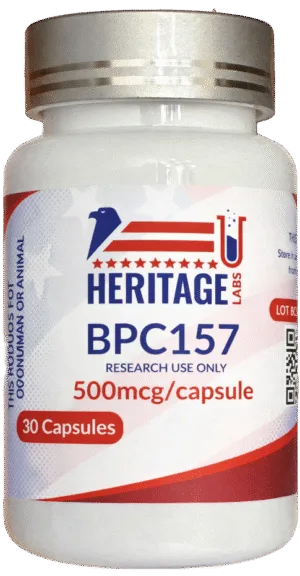
BPC-157 Capsules: Research, Potential Uses & Safety
BPC-157 capsules are products marketed around an experimental peptide known as BPC-157 (Body Protection Compound 157). The compound has attracted interest in research involving tissue repair, gastrointestinal function, inflammation, and musculoskeletal biology.
However, it is important to distinguish experimental research findings from established medical benefits. BPC-157 is not an FDA-approved human medication, and evidence from well-controlled human clinical studies remains limited.
What Is BPC-157?
BPC-157 is a synthetic peptide consisting of 15 amino acids. It was derived from a protein sequence associated with gastric juice and has primarily been studied in laboratory and animal research.
Researchers have investigated BPC-157 in areas including:
- Tissue repair
- Gastrointestinal function
- Inflammation
- Blood-vessel formation
- Tendon and ligament research
- Musculoskeletal recovery
Much of the available evidence comes from preclinical studies rather than large, high-quality human trials.
What Are BPC-157 Capsules?
BPC-157 capsules are oral products containing a stated amount of BPC-157 or a preparation marketed as containing the peptide.
The capsule format is particularly important when evaluating claims about BPC-157, because peptides can be affected by digestion and absorption. Evidence from laboratory or injected preparations cannot automatically be applied to an oral capsule.
Consequently, claims that oral BPC-157 capsules reliably deliver particular therapeutic effects should be treated cautiously unless supported by appropriate human clinical evidence.
What Is BPC-157 Researched For?
BPC-157 has received scientific interest because experimental studies have reported biological effects involving tissue and gastrointestinal systems.
Tissue Repair
Animal and laboratory studies have investigated whether BPC-157 may influence processes associated with tissue repair and regeneration.
Tendon and Ligament Research
Researchers have also studied BPC-157 in experimental models involving tendons, ligaments, and other connective tissues.
These findings have generated interest in the peptide, but they do not establish BPC-157 as a proven treatment for sports injuries or musculoskeletal conditions.
Gastrointestinal Research
BPC-157 has also been studied in experimental models involving the gastrointestinal system. Research has explored its potential effects on intestinal tissues and inflammatory processes.
Again, promising laboratory findings require confirmation through properly designed human clinical trials.
Is BPC-157 FDA Approved?
BPC-157 is not an FDA-approved medication.
The FDA has identified BPC-157 as a substance that may present safety risks when used in compounded drug products. Concerns include limited safety information, potential immunogenicity, and difficulties associated with characterizing and controlling peptide-related impurities.
Therefore, BPC-157 should not be presented as an established treatment for injuries, gastrointestinal disorders, inflammation, or other medical conditions.
Are BPC-157 Capsules Safe?
The safety of BPC-157 capsules for human therapeutic use has not been adequately established.
Potential concerns with experimental peptide products include:
- Unknown long-term effects
- Uncertain absorption and bioavailability
- Immune reactions
- Product contamination
- Peptide impurities
- Inconsistent product quality
- Uncertain interactions with other medications
The fact that a product is sold as a capsule does not necessarily mean that it has been evaluated for safety or effectiveness as a medicine.
BPC-157 and Human Research
One of the biggest limitations surrounding BPC-157 is the relatively small amount of high-quality human evidence.
Animal studies can provide valuable information about biological mechanisms and potential therapeutic directions, but results in animals do not necessarily translate into equivalent effects in humans.
More rigorous clinical research is needed to determine whether BPC-157 has meaningful therapeutic benefits and whether those benefits outweigh potential risks.
Frequently Asked Questions
What are BPC-157 capsules?
BPC-157 capsules are oral products marketed as containing the experimental peptide BPC-157.
What is BPC-157 researched for?
Research has investigated BPC-157 in areas including tissue repair, gastrointestinal biology, inflammation, and musculoskeletal tissues.
Is BPC-157 FDA approved?
No. BPC-157 is not an FDA-approved medication.
Do BPC-157 capsules work?
There is currently insufficient high-quality human evidence to establish oral BPC-157 capsules as an effective treatment for medical conditions.
Is BPC-157 a medication?
BPC-157 is an experimental peptide rather than an FDA-approved conventional medication.
Conclusion
BPC-157 capsules have attracted considerable attention because of experimental research into tissue repair, gastrointestinal biology, inflammation, and musculoskeletal health. However, many claims surrounding the peptide are based on laboratory or animal research rather than strong human clinical evidence.
The oral capsule format also introduces important questions about absorption, stability, bioavailability, and effectiveness that cannot be answered simply by looking at research involving other formulations.
For these reasons, BPC-157 should be regarded as an experimental research compound rather than an established medical treatment.
Educational disclaimer: This article is for educational and research-information purposes only. It is not medical advice, does not provide dosing or administration instructions, and should not be used as a substitute for consultation with a qualified healthcare professional.

Reviews
There are no reviews yet.