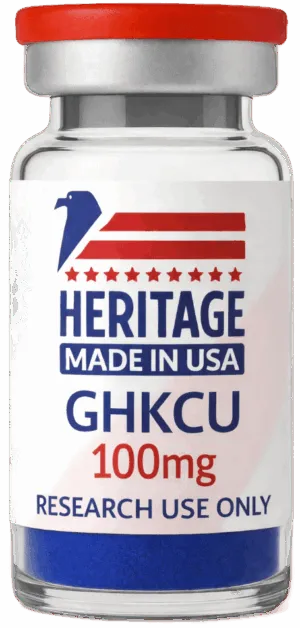
GHK-Cu 100mg: Powerful Educational Research, Benefits & Safety Guide
GHK-Cu 100mg refers to a product containing a stated amount of GHK-Cu (glycyl-L-histidyl-L-lysine copper), a naturally occurring copper-binding peptide that has attracted scientific interest in skin biology, wound-healing research, collagen production, and tissue remodeling.
GHK-Cu is not an FDA-approved drug for general therapeutic use, and evidence for many commonly marketed benefits remains limited. The 100mg designation describes the labeled quantity of a particular product and should not be interpreted as an established therapeutic dose.
What Is GHK-CU 100mg?
GHK-Cu is a naturally occurring tripeptide that can bind copper ions. GHK stands for glycyl-histidyl-lysine, while “Cu” refers to copper.
The peptide has been studied for its relationship with several biological processes, particularly those involving the skin and extracellular matrix.
Research has explored GHK-Cu in areas including:
- Collagen and elastin biology
- Skin repair
- Wound-healing mechanisms
- Extracellular-matrix remodeling
- Inflammatory signaling
- Cellular antioxidant pathways
- Tissue regeneration research
How Does GHK-CU 100mg Work?
GHK-Cu can bind copper and may influence cellular signaling involved in tissue maintenance and repair.
Experimental research suggests that GHK-Cu can affect the expression of various genes associated with extracellular-matrix production and remodeling. It has also been investigated for potential effects on inflammatory and oxidative-stress pathways.
However, laboratory findings do not necessarily translate into proven clinical benefits in humans.
GHK-Cu and Skin Research
One of the best-known areas of GHK-Cu research is skin biology.
Studies have investigated its potential relationship with collagen production, skin elasticity, wound repair, and extracellular-matrix organization.
Because collagen is an important structural protein in skin, researchers have explored whether GHK-Cu could influence processes involved in maintaining skin structure.
These findings have contributed to the inclusion of copper peptides in some cosmetic and dermatological formulations.
GHK-Cu and Wound-Healing Research
GHK-Cu has also been studied in relation to wound healing.
Experimental research has investigated processes such as:
- Cell migration
- Collagen formation
- Angiogenesis
- Tissue remodeling
- Inflammatory responses
These mechanisms are relevant to normal tissue repair. However, research findings should not be interpreted as proof that GHK-Cu can safely or effectively treat wounds or injuries without appropriate medical care.
What Does “100mg” Mean?
The 100mg designation indicates the stated amount of GHK-Cu associated with a particular product.
It does not establish an approved human dosage.
GHK-Cu products may differ in purity, formulation, concentration, and intended use. Therefore, a label stating “GHK-Cu 100mg” should not automatically be interpreted as a clinically validated treatment quantity.
Potential Research Areas
Collagen Research
GHK-Cu has been investigated for its potential effects on collagen-related pathways and extracellular-matrix remodeling.
Skin Aging
Research has explored whether copper peptides may influence processes associated with changes in skin structure and appearance over time.
Tissue Repair
Laboratory studies have investigated GHK-Cu in relation to cellular migration and tissue-repair processes.
Inflammatory Signaling
GHK-Cu has also been studied for possible effects on inflammatory pathways.
GHK-Cu and Anti-Aging Claims
GHK-Cu is frequently promoted online as an anti-aging peptide.
Although research involving skin biology has produced interesting findings, claims that GHK-Cu can reverse aging or produce guaranteed cosmetic results are not established by high-quality clinical evidence.
The distinction between cosmetic research and systemic medical treatment is particularly important when evaluating GHK-Cu products.
Is GHK-Cu FDA Approved?
GHK-Cu itself is not FDA-approved as a systemic therapeutic medication.
Copper peptides may appear in cosmetic products, but cosmetic use does not mean that a product is approved as a drug for treating disease or modifying systemic health.
A product marketed as GHK-Cu 100mg should therefore not be described as an FDA-approved injectable or therapeutic medicine unless it has a specific applicable regulatory authorization.
Safety Considerations
The safety profile of GHK-Cu depends substantially on the formulation and route of exposure.
For research products, important concerns include:
- Limited clinical evidence for systemic use
- Product purity
- Contamination
- Incorrect labeling
- Variable potency
- Unknown long-term effects
- Potential reactions to copper-containing compounds
People with medical conditions or those considering use of an experimental formulation should consult an appropriately qualified healthcare professional.
Frequently Asked Questions
What is GHK-Cu 100mg?
GHK-Cu 100mg refers to a product labeled as containing 100mg of the copper-binding peptide GHK-Cu.
What is GHK-Cu researched for?
Research has focused primarily on skin biology, collagen, extracellular-matrix remodeling, tissue repair, inflammation, and cellular signaling.
Is GHK-Cu a peptide?
Yes. GHK-Cu is a copper-binding tripeptide.
Is GHK-Cu FDA approved?
GHK-Cu is not FDA-approved as a systemic therapeutic medication.
Does GHK-Cu reverse aging?
There is scientific interest in its potential effects on skin and tissue biology, but evidence is insufficient to claim that GHK-Cu reverses aging.
Conclusion
GHK-Cu 100mg is a copper-binding peptide that has attracted significant research interest because of its potential involvement in collagen biology, skin repair, extracellular-matrix remodeling, inflammatory signaling, and tissue regeneration.
Although laboratory and cosmetic research has produced promising observations, many claims surrounding systemic GHK-Cu use remain insufficiently established. The 100mg designation represents a stated product quantity rather than an approved therapeutic dose.
Educational disclaimer: This content is for educational and SEO purposes only. It is not medical advice and does not provide individualized dosing, preparation, administration, purchasing, or treatment instructions.
Reviews
There are no reviews yet.