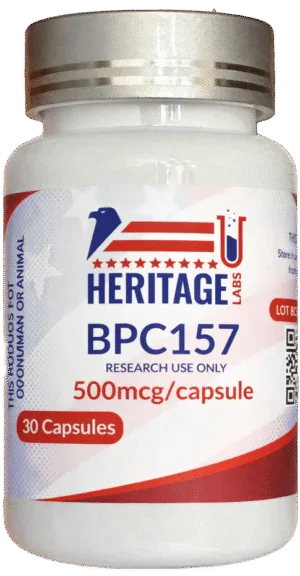
BPC-157 Capsules
BPC-157 Capsules: Research, Potential Uses, Benefits & Safety
BPC-157 capsules are oral products marketed as containing BPC-157, an experimental peptide that has attracted scientific interest because of research involving tissue repair, gastrointestinal biology, inflammation, blood-vessel formation, and cellular signaling. Despite considerable discussion online, it is important to distinguish scientific research from established medical evidence.
Most BPC-157 research has been conducted in laboratory and animal models. Human evidence remains limited, particularly regarding oral capsule formulations. Consequently, BPC-157 should not be presented as a proven treatment for injuries, digestive disorders, inflammation, or other medical conditions.
What Is BPC-157?
BPC-157, commonly described as Body Protection Compound 157, is a synthetic peptide consisting of 15 amino acids. It has been studied experimentally because researchers believe it may interact with biological pathways involved in tissue responses, vascular activity, and inflammation.
Preclinical studies have examined BPC-157 in different experimental models involving muscles, tendons, ligaments, the gastrointestinal system, and other tissues. Some findings have generated interest in its potential biological effects.
However, results from laboratory or animal studies cannot automatically be translated into equivalent effects in humans. Proper clinical trials are necessary to establish whether a compound is effective and safe for medical use.
What Are BPC-157 Capsules?
BPC-157 capsules are oral preparations marketed as containing the BPC-157 peptide.
The oral route is an especially important consideration when evaluating BPC-157 research. Evidence involving laboratory preparations, animal studies, or other routes of administration does not automatically demonstrate that an oral capsule will produce the same biological effects.
Factors such as digestion, absorption, stability, bioavailability, formulation, and metabolism can influence how a peptide behaves in the human body.
For this reason, claims about BPC-157 capsules should be evaluated separately from general claims about BPC-157 research.
What Is BPC-157 Being Researched For?
Researchers have investigated BPC-157 in several areas of biological science.
Tissue-Repair Research
One of the most widely discussed areas of BPC-157 research involves tissue repair. Experimental studies have investigated its potential relationship with processes involved in the healing of muscles, tendons, ligaments, and other tissues.
These findings have contributed to interest in BPC-157 among researchers studying regenerative biology.
However, experimental evidence does not establish that BPC-157 capsules can accelerate injury recovery in humans.
Gastrointestinal Research
BPC-157 has also been studied in relation to the gastrointestinal system. Experimental research has investigated possible effects involving intestinal tissues, inflammation, and protective biological responses.
This research is interesting because gastrointestinal function involves complex interactions between tissues, immune pathways, blood vessels, and cellular signaling.
Nevertheless, there is currently insufficient clinical evidence to establish BPC-157 as a treatment for ulcers, inflammatory bowel disease, digestive disorders, or other gastrointestinal conditions.
Inflammation Research
Inflammation is another area of scientific interest surrounding BPC-157.
Researchers have examined whether BPC-157 may influence inflammatory pathways in experimental models. Although some results have been promising, laboratory findings do not demonstrate that the peptide can safely or effectively treat inflammatory diseases in people.
BPC-157 and Musculoskeletal Research
BPC-157 has received considerable attention in discussions about muscles, tendons, ligaments, and other connective tissues.
Animal studies have investigated its potential effects in models of tissue injury. These studies have contributed to hypotheses concerning cell migration, vascular responses, and tissue-repair mechanisms.
However, human clinical evidence remains insufficient to confirm these potential effects.
Anyone experiencing a muscle, tendon, ligament, or joint injury should rely on appropriate medical assessment rather than treating experimental peptide research as a substitute for established care.
Is BPC-157 FDA Approved?
BPC-157 is not an FDA-approved medication.
The U.S. Food and Drug Administration has identified significant uncertainties regarding BPC-157, including limited safety information, potential immunogenicity, peptide impurities, and difficulties associated with characterizing the substance.
The absence of FDA approval means that BPC-157 has not been established as a standard prescription treatment for the conditions frequently mentioned in online marketing.
This distinction is particularly important when evaluating websites that describe BPC-157 as a guaranteed treatment or clinically proven healing compound.
Safety Considerations
Because human clinical research is limited, the complete safety profile of BPC-157 remains uncertain.
Potential concerns surrounding experimental peptide products include:
- Unknown long-term effects
- Uncertain absorption and bioavailability
- Potential immune reactions
- Peptide impurities
- Contamination
- Incorrect concentration
- Variable manufacturing quality
- Uncertain interactions with medicines
The quality of products marketed online can also vary considerably. A product’s label does not necessarily guarantee its identity, purity, concentration, or sterility.
BPC-157 Capsules and Human Research
Human research is particularly important when evaluating whether an experimental peptide should be considered medically useful.
A compound can demonstrate interesting biological activity in animals while producing different results in humans. Researchers therefore need well-designed clinical studies examining effectiveness, safety, pharmacokinetics, appropriate formulations, and potential adverse effects.
For BPC-157 capsules specifically, information about oral absorption and long-term human safety remains limited.
Frequently Asked Questions
What are BPC-157 capsules?
BPC-157 capsules are oral products marketed as containing the experimental peptide BPC-157.
What is BPC-157 researched for?
Research has investigated BPC-157 in relation to tissue repair, gastrointestinal biology, inflammation, vascular processes, and musculoskeletal tissues.
Do BPC-157 capsules heal injuries?
There is currently insufficient high-quality human evidence to establish oral BPC-157 as a proven treatment for injuries.
Is BPC-157 a medication?
BPC-157 is an experimental peptide rather than an FDA-approved medication.
Is BPC-157 FDA approved?
No. BPC-157 is not an FDA-approved drug.
Are BPC-157 capsules safe?
Their long-term safety has not been adequately established. Experimental peptide products can also have concerns involving purity, identity, manufacturing quality, and contamination.
Is BPC-157 suitable for everyone?
Because BPC-157 remains experimental and its safety profile is not fully established, it should not be assumed to be appropriate for everyone.
Conclusion
BPC-157 capsules have attracted substantial interest because of experimental research involving tissue repair, gastrointestinal biology, inflammation, vascular activity, and musculoskeletal processes. Preclinical studies have produced findings that warrant further investigation, but these findings should not be confused with established clinical benefits.
The most important consideration is the difference between research potential and proven medical effectiveness. BPC-157 has not received FDA approval as a medication, and human evidence—particularly concerning oral capsule formulations—remains limited.
Consumers should therefore approach claims about BPC-157 benefits carefully and consult qualified healthcare professionals when dealing with injuries, gastrointestinal symptoms, chronic inflammation, or other health concerns.
Educational disclaimer: This article is intended for educational and SEO purposes only. It is not medical advice and does not provide dosing, administration, or treatment instructions.

Reviews
There are no reviews yet.