

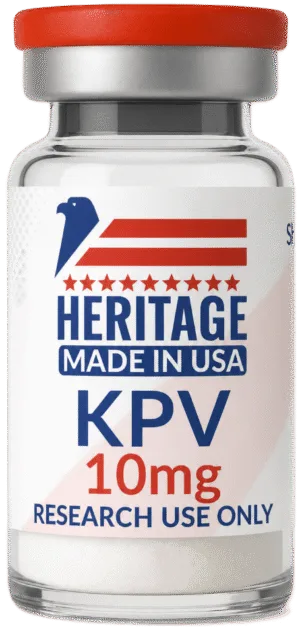
KPV 10mg
KPV 10 mg: Research, Potential Uses & Safety
KPV 10 mg refers to a preparation containing KPV, a short peptide derived from the naturally occurring anti-inflammatory peptide α-MSH (alpha-melanocyte-stimulating hormone). KPV has attracted scientific interest because laboratory and preclinical research has investigated its potential involvement in inflammatory and immune processes.
However, KPV 10mg remains an experimental research peptide, and evidence from well-controlled human clinical studies is limited. Claims about treating inflammation, gastrointestinal conditions, skin problems, or other diseases should therefore be treated cautiously.
What Is KPV 10mg
KPV 10mg stands for the three-amino-acid sequence Lys-Pro-Val, which represents the C-terminal portion of α-MSH.
Researchers have investigated KPV 10mg because α-MSH and related peptides are involved in biological pathways associated with inflammation and immune regulation.
Laboratory studies suggest that KPV 10mg may influence inflammatory signaling, but these findings do not establish KPV as an approved medical treatment.
What Is KPV 10 mg?
The 10 mg designation generally describes the stated quantity of KPV in a particular research preparation.
It is important to understand that 10 mg is a quantity, not automatically a recommended dose. The amount contained in a research preparation does not establish an appropriate amount for human use.
What Is KPV Being Researched For?
KPV 10mg has been investigated primarily in preclinical research involving inflammatory and immune pathways.
Areas of scientific interest include:
- Inflammatory signaling
- Gastrointestinal inflammation
- Immune-system regulation
- Skin and tissue research
- Oxidative stress
- Cellular responses to inflammation
Some experimental studies have produced promising findings, but additional research is needed to determine whether those findings translate into meaningful benefits in humans.
KPV 10mg and Inflammation
One reason KPV has attracted attention is its potential relationship with inflammatory pathways.
Research involving α-MSH-derived peptides has suggested that these compounds may influence inflammatory signaling without necessarily producing all of the effects associated with the parent hormone.
However, laboratory activity should not be interpreted as proof that KPV can safely or effectively treat an inflammatory disease in people.
KPV 10mg and Gastrointestinal Research
KPV 10mg has also been studied in experimental models involving the gastrointestinal tract.
Researchers have investigated whether KPV may influence intestinal inflammation and interactions between intestinal tissues and immune pathways.
These studies are scientifically interesting, but human evidence remains insufficient to establish KPV as a clinically proven treatment for gastrointestinal conditions.
Is KPV FDA Approved?
KPV is not an FDA-approved medication.
The fact that KPV 10mg a peptide is discussed in scientific research or sold as a “research peptide” does not mean that it has been evaluated and approved as a medicine.
Regulatory approval requires appropriate evidence concerning safety, effectiveness, manufacturing quality, and clinical use.
Potential Safety Concerns
Because human clinical evidence for KPV is limited, its complete safety profile has not been established.
Potential concerns with experimental peptide products can include:
- Unknown long-term effects
- Immune reactions
- Contamination
- Peptide impurities
- Incorrect concentration or identity
- Uncertain interactions with medications
- Uncertain effects from different formulations or routes of administration
Product quality is particularly important with experimental compounds because products obtained outside regulated pharmaceutical channels may not have the same quality controls as approved medicines.
Frequently Asked Questions
What is KPV 10 mg?
KPV 10 mg generally refers to a research preparation containing a stated quantity of the KPV peptide.
What does KPV stand for?
KPV represents the amino-acid sequence Lys-Pro-Val, derived from the C-terminal portion of alpha-MSH.
What is KPV researched for?
Research has investigated KPV in relation to inflammation, immune regulation, gastrointestinal biology, and cellular responses.
Is KPV an approved medication?
No. KPV is an experimental peptide and is not an FDA-approved medication.
Does KPV treat inflammation?
Preclinical research has investigated potential anti-inflammatory activity, but there is insufficient high-quality human evidence to establish KPV as a proven treatment for inflammatory conditions.
Is 10 mg a recommended dose?
No. The “10 mg” label describes the quantity in a preparation and does not establish an appropriate therapeutic dose.
Conclusion
KPV 10 mg is an experimental peptide preparation associated with research into inflammation, immune regulation, gastrointestinal biology, and cellular signaling. Preclinical findings have generated interest in its potential biological effects, but considerably more human research is needed.
KPV should therefore not be presented as a proven treatment or substitute for approved medical therapies. Anyone considering an experimental peptide should discuss the potential risks and alternatives with a qualified healthcare professional.
Educational disclaimer: This content is for educational and research-information purposes only. It is not medical advice and does not provide dosing, preparation, or administration instructions.

Reviews
There are no reviews yet.