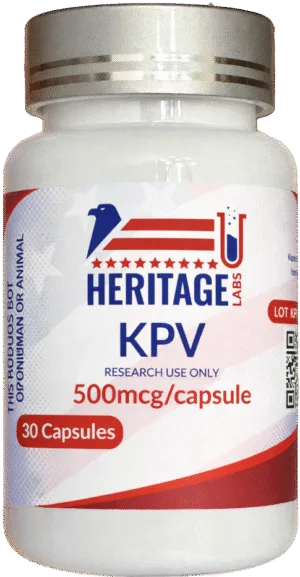
KPV Capsules: Research, Potential Uses & Safety
KPV capsules are products marketed as containing KPV, a short peptide derived from the naturally occurring melanocortin-related peptide α-MSH. KPV has attracted scientific interest because of its potential effects on inflammatory and intestinal pathways.
However, KPV remains an experimental research peptide, and evidence supporting oral KPV capsules for treating medical conditions is limited. Research findings should not be presented as established clinical benefits.
What Is KPV?
KPV stands for Lys-Pro-Val (lysine-proline-valine), a three-amino-acid peptide fragment associated with α-MSH.
Researchers have investigated KPV because experimental studies suggest it may interact with pathways involved in inflammation and immune signaling.
Research areas include:
- Inflammatory signaling
- Gastrointestinal biology
- Intestinal barrier function
- Immune responses
- Cellular signaling
- Oxidative-stress pathways
Most of the evidence remains preclinical, meaning that additional human research is required.
What Are KPV Capsules?
KPV capsules are oral formulations marketed as containing KPV.
The oral delivery of a peptide raises important scientific questions because peptides can be affected by digestion and may have limited absorption through the gastrointestinal tract. Consequently, findings from laboratory studies or other formulations cannot automatically be applied to capsules.
The formulation, stability, purity, and bioavailability of a particular product can also vary.
KPV and Inflammation Research
One of the primary areas of interest surrounding KPV is inflammatory signaling.
Preclinical research has explored whether KPV may influence pathways associated with inflammatory responses. Some experimental work has focused specifically on intestinal inflammation and interactions between peptides and epithelial cells.
These findings are scientifically interesting, but they do not establish KPV capsules as a proven treatment for inflammatory disorders.
KPV and Gut Research
KPV has also been investigated in gastrointestinal research.
Researchers have explored its potential relationship with intestinal epithelial cells, inflammatory pathways, and the intestinal environment. These studies have contributed to interest in KPV as a possible research tool for understanding gastrointestinal inflammation.
However, laboratory and animal findings should not be interpreted as evidence that KPV capsules can treat conditions such as inflammatory bowel disease or other gastrointestinal disorders.
Potential Research Applications
KPV research has focused on several biological areas, including:
- Inflammation
- Intestinal health
- Immune signaling
- Epithelial-cell function
- Oxidative stress
- Cellular communication
These should be described as research applications rather than proven therapeutic uses.
Is KPV FDA Approved?
No. KPV is not an FDA-approved medication.
It should not be represented as an approved treatment for inflammatory disease, gastrointestinal conditions, skin disorders, or other medical problems.
Products sold online as KPV capsules may also differ considerably in their formulation and quality.
Safety Considerations
The long-term safety of oral KPV in humans has not been adequately established.
Potential concerns associated with experimental peptide products include:
- Limited human safety data
- Unknown long-term effects
- Variable purity
- Incorrect labeling
- Contamination
- Uncertain bioavailability
- Potential interactions with other substances
The safety of one research formulation cannot automatically be assumed for another product.
Frequently Asked Questions
What are KPV capsules?
KPV capsules are oral products marketed as containing KPV, a three-amino-acid peptide fragment related to α-MSH.
What is KPV researched for?
Research has investigated KPV in relation to inflammatory signaling, gastrointestinal biology, immune responses, and intestinal epithelial function.
Is KPV a peptide?
Yes. KPV is a very short peptide consisting of three amino acids: lysine, proline, and valine.
Does KPV treat inflammation?
Preclinical research has identified potentially interesting anti-inflammatory mechanisms, but there is insufficient clinical evidence to establish KPV as a proven treatment for inflammation.
Is KPV FDA approved?
No. KPV is an experimental research peptide and is not an FDA-approved medication.
Conclusion
KPV capsules are associated with emerging research into inflammatory signaling, gastrointestinal biology, immune responses, and cellular processes. Its short peptide structure and relationship to α-MSH have made KPV an interesting subject for laboratory research.
Nevertheless, the available evidence is primarily preclinical, and substantially more human research is required to determine its safety, absorption, effectiveness, and potential clinical applications.
Educational disclaimer: This article is provided for educational and SEO purposes only. It is not medical advice and does not provide dosing, administration, preparation, purchasing, or treatment instructions.


Reviews
There are no reviews yet.