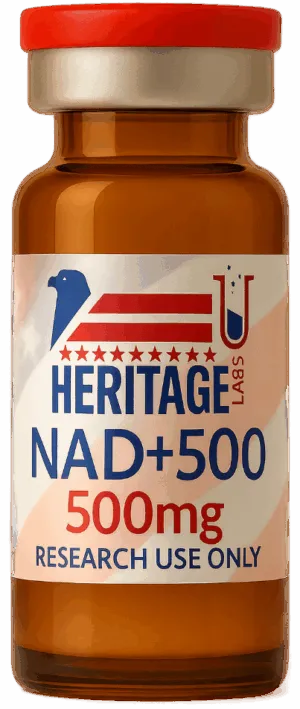
NAD+ 500mg: Educational Research, Benefits & Safety
NAD+ 500mg refers to a product containing a stated 500mg quantity of nicotinamide adenine dinucleotide (NAD+), a naturally occurring coenzyme found in virtually every cell of the body. NAD+ plays an important role in cellular energy metabolism and numerous biochemical processes.
What Is NAD+ 500mg?
NAD+ is a coenzyme involved in converting nutrients into usable cellular energy. It participates in oxidation-reduction reactions and is also involved in processes related to DNA repair, cellular signaling, and maintaining normal cellular function.
NAD+ exists primarily in two forms:
- NAD+ (oxidized form)
- NADH (reduced form)
Cells continuously convert between these forms as part of normal metabolism.
NAD+ 500mg and Cellular Energy
One of NAD+’s best-established biological roles is supporting energy production.
Within mitochondria, NAD+ participates in metabolic pathways that help transfer energy from carbohydrates, fats, and other nutrients. This makes NAD+ an important component of normal cellular respiration.
Because energy metabolism changes with age and in certain disease states, NAD+ biology has become an active area of scientific research.
NAD+ and Healthy Aging Research
NAD+ has attracted considerable interest in longevity and healthy-aging research.
Scientists have investigated whether changes in cellular NAD+ availability are associated with:
- Mitochondrial function
- Cellular metabolism
- DNA repair
- Oxidative stress
- Cellular signaling
- Age-related biological changes
However, research into NAD+ and aging does not establish that taking an NAD+ supplement or receiving NAD+ directly will extend human lifespan.
Human clinical evidence remains an important consideration when evaluating claims surrounding NAD+ products.
NAD+ 500mg: What Does the Amount Mean?
The 500mg designation indicates the stated quantity of NAD+ associated with a particular product or formulation.
It should not automatically be interpreted as a medically recommended dose.
NAD+ products can differ substantially depending on whether they are formulated for oral, topical, or clinical use. The route of administration can also significantly affect how the compound is handled by the body.
NAD+ Research and Metabolism
NAD+ participates in several important cellular processes.
It acts as a cofactor for enzymes involved in energy metabolism and also serves as a substrate for certain enzymes involved in cellular signaling.
Researchers are particularly interested in NAD+-dependent enzymes called sirtuins and PARPs.
Sirtuins participate in cellular regulation, while PARP enzymes are involved in DNA-damage responses. These relationships help explain why NAD+ biology is relevant to aging and cellular-health research.
NAD+ and Exercise Research
NAD+ metabolism is also relevant to exercise physiology because physical activity increases energy requirements and mitochondrial activity.
Researchers have studied relationships between NAD+ metabolism, mitochondrial function, and physical performance.
However, claims that NAD+ supplementation directly improves athletic performance or dramatically increases energy should be interpreted cautiously because clinical evidence varies according to the formulation and population studied.
NAD+ Versus NAD+ Precursors
It is important to distinguish NAD+ itself from compounds that the body can use to produce NAD+.
Common NAD+ precursors studied in nutritional and biomedical research include:
- Nicotinamide
- Nicotinic acid
- Nicotinamide riboside (NR)
- Nicotinamide mononucleotide (NMN)
These compounds are not identical to NAD+ and have different absorption and metabolic characteristics.
Safety Considerations
The safety of an NAD+ product depends on its formulation, route of administration, purity, and intended use.
Potential concerns may include:
- Gastrointestinal discomfort
- Headache
- Nausea
- Flushing or other reactions depending on the formulation
- Injection-site reactions for injectable preparations
- Contamination or incorrect concentration in improperly manufactured products
Products marketed for injection require particular caution because sterility and manufacturing quality are critical.
People with medical conditions or those taking prescription medications should discuss NAD+-containing products with an appropriately qualified healthcare professional.
Frequently Asked Questions
What is NAD+ 500mg?
NAD+ 500mg refers to a product containing a stated 500mg quantity of nicotinamide adenine dinucleotide.
What does NAD+ do?
NAD+ is a naturally occurring coenzyme involved in cellular energy production, metabolism, cellular signaling, and DNA-repair-related processes.
Is NAD+ a peptide?
No. NAD+ is a coenzyme, not a peptide.
Is NAD+ the same as NMN?
No. NMN is a precursor involved in NAD+ biosynthesis, whereas NAD+ is the active coenzyme itself.
Does NAD+ reverse aging?
There is ongoing research into NAD+ biology and aging, but there is currently insufficient evidence to conclude that NAD+ products can reverse aging in humans.
Conclusion
NAD+ 500mg refers to a product containing a stated amount of nicotinamide adenine dinucleotide, an essential coenzyme involved in cellular energy metabolism and numerous biological processes.
NAD+ has become an important subject of research involving cellular metabolism, mitochondrial function, DNA repair, healthy aging, and cellular signaling. However, scientific interest should not be confused with proof of anti-aging or disease-treatment claims.
The quality, formulation, route of administration, and regulatory status of a particular NAD+ product are important considerations.
Educational disclaimer: This content is for educational and SEO purposes only. It is not medical advice and does not provide individualized dosing, preparation, administration, purchasing, or treatment instructions.




Reviews
There are no reviews yet.