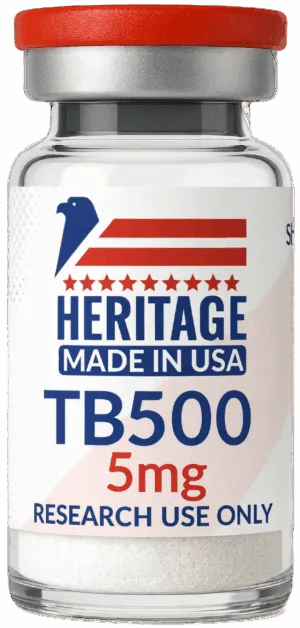
TB-500 5mg
TB-500 5 mg: Research, Potential Uses, Effects & Safety
TB-500 5 mg is a product name commonly associated with a synthetic peptide related to thymosin beta-4 (Tβ4). It has attracted interest in research involving tissue repair, cell migration, angiogenesis, and wound-healing processes.
However, it is important to distinguish experimental research from established medical treatment. TB-500 is not an FDA-approved medication, and evidence supporting therapeutic benefits in humans remains limited.
What Is TB-500 5mg?
TB-500 is commonly described as a synthetic version or analogue of thymosin beta-4-related sequences. Thymosin beta-4 is a naturally occurring peptide involved in cellular processes such as actin regulation and cell migration.
Research into thymosin beta-4 has explored biological processes associated with:
- Tissue repair
- Wound healing
- Cell migration
- Blood-vessel formation
- Inflammation
- Muscle and connective-tissue research
The biological activity of TB-500 products can depend on their exact chemical composition, so it should not automatically be assumed that research on naturally occurring thymosin beta-4 applies directly to every product marketed as TB-500.
What Does “TB-500 5 mg” Mean?
The 5 mg designation generally describes the stated quantity of peptide in a particular preparation.
It does not establish a medically recommended dose or treatment schedule. Product quantity, clinical dosage, and safety are separate concepts.
For educational purposes, the label should therefore be interpreted as a description of the amount contained in the preparation rather than instructions for human use.
What Is TB-500 Researched For?
TB-500 5mg Research involving thymosin beta-4 and related peptides has examined several biological processes.
Tissue Repair
Scientists have investigated thymosin beta-4 in relation to cellular migration and tissue repair. These processes are important components of how the body responds to injury.
Wound-Healing Research
Experimental TB-500 5mg research has examined whether thymosin beta-4 can influence wound-healing pathways and the formation of new blood vessels.
These findings have generated scientific interest but do not establish TB-500 as an approved treatment for wounds.
Musculoskeletal Research
Thymosin beta-4-related research has also explored muscle and connective-tissue processes. This has contributed to interest in TB-500 5mg among sports and performance communities.
However, claims that TB-500 reliably accelerates recovery from injuries in humans are not supported by sufficient high-quality clinical evidence.
Is TB-500 5mg FDA Approved?
TB-500 is not an FDA-approved medication.
The FDA has identified thymosin beta-4 fragment (LKKTETQ), commonly referred to as TB-500 5mg, as a substance presenting potential safety concerns in compounded drug products. The agency has highlighted limited human safety information and concerns including immunogenicity and peptide-related impurities.
This means that TB-500 5mg should not be marketed or described as an established treatment for injuries, inflammation, or tissue repair.
Potential Safety Concerns
TB-500 5mg Because human clinical data are limited, the complete safety profile of TB-500 remains uncertain.
Potential concerns associated with experimental peptide products include:
- Unknown long-term effects
- Immune reactions
- Peptide impurities
- Product contamination
- Incorrect concentration or identity
- Uncertain interactions with other medications
- Uncertain effects from different formulations
The quality of an experimental peptide can also vary depending on manufacturing and storage conditions.
TB-500 5mg and Athletic Performance
TB-500 5mg is sometimes promoted online for recovery, performance, or muscle-related purposes. These claims should be approached cautiously.
There is insufficient high-quality human evidence to establish TB-500 5mg as a reliable performance-enhancing or injury-recovery treatment.
Athletes should also be aware that thymosin-β4 and its derivatives are prohibited by the World Anti-Doping Agency (WADA) under its prohibited-substances framework.
Frequently Asked Questions
What is TB-500 5 mg?
TB-500 5 mg generally refers to a preparation marketed as containing 5 mg of TB-500 or a related thymosin beta-4 fragment.
What is TB-500 5mg researched for?
Research related to thymosin beta-4 has investigated tissue repair, wound healing, cell migration, angiogenesis, and inflammatory processes.
Is TB-500 5mg the same as thymosin beta-4?
They are often discussed together, but they should not automatically be treated as identical substances. TB-500 commonly refers to a specific synthetic thymosin beta-4-related fragment or analogue.
Is TB-500 5mg FDA approved?
No. TB-500 does not have FDA approval as a general therapeutic medication.
Does TB-500 5mg heal injuries?
There is insufficient high-quality human evidence to establish TB-500 as a proven treatment for injuries.
Is 5 mg a recommended dose?
No. The 5 mg label describes the amount in a preparation and does not establish an appropriate therapeutic dose.
Conclusion
TB-500 5 mg is associated with experimental research into thymosin beta-4-related biological pathways, including tissue repair, cell migration, wound healing, and angiogenesis. Although preclinical research has generated interest, evidence demonstrating safe and effective therapeutic use in humans remains limited.
TB-500 should therefore be regarded as an experimental research compound rather than an established medical treatment. Claims about accelerated injury recovery, muscle growth, or performance should be evaluated critically.
Educational disclaimer: This content is provided for educational and research-information purposes only. It is not medical advice and does not provide dosing, reconstitution, injection, or treatment instructions.


Reviews
There are no reviews yet.